That “Incredible Deal” in Hawaii Might Be the Most Expensive Cheap Property You’ll Ever Buy

Todd Hudson
Team Lead & Lead Listing Specialist, The 808 Team at Keller Williams Maui Realty
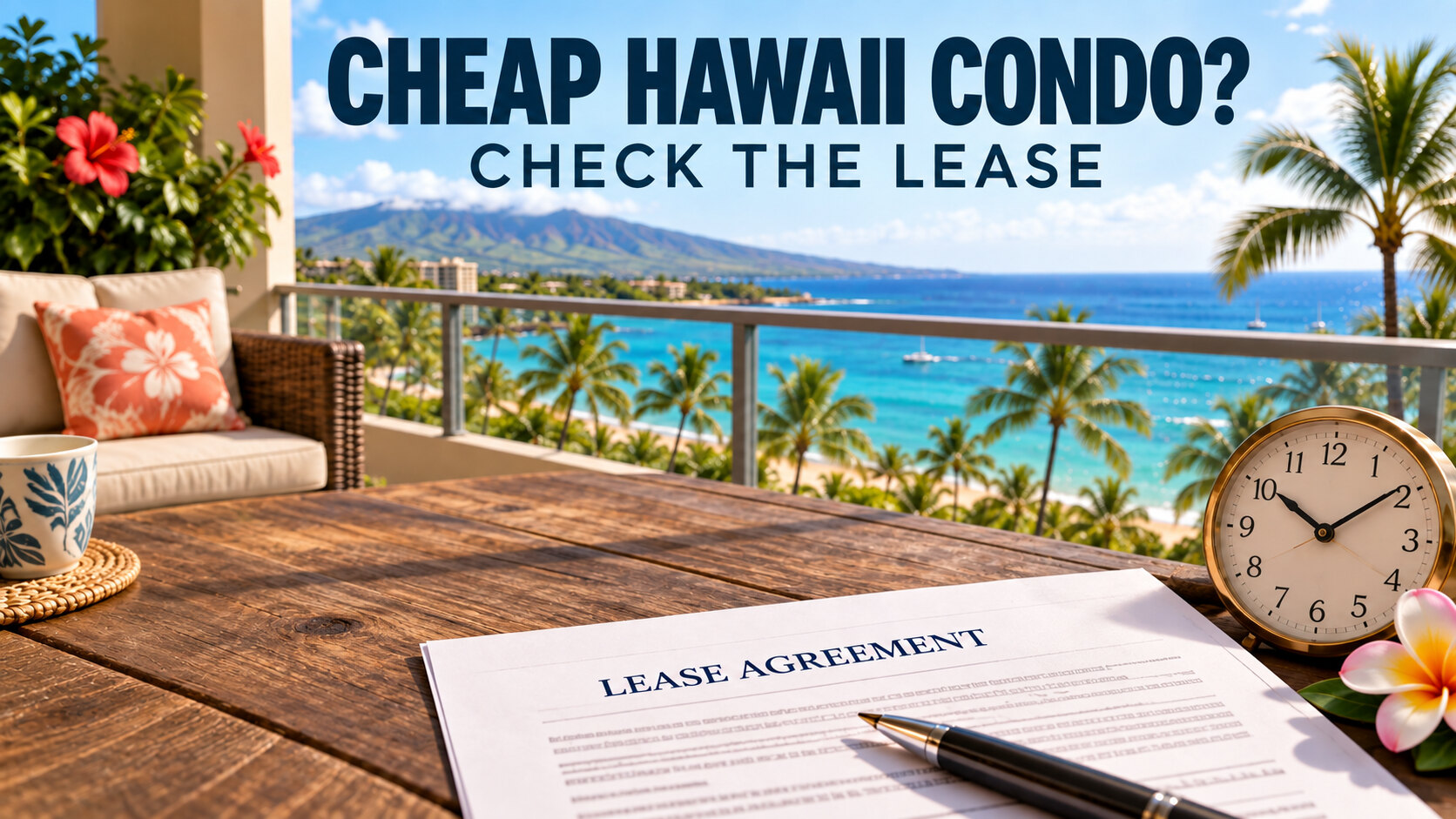
If you’re shopping Hawaii real estate and you see a condo priced way below everything else around it, stop for a second.
That “steal” might not be a steal at all. In Hawaii, the cheapest property on the screen can easily become the most expensive cheap property you’ll ever buy once you factor in lease rent, financing limits, resale risk, and what happens when the lease gets short.
I tell buyers this all the time: the purchase price is only the beginning. If the listing says leasehold or LH, you need to understand exactly what you’re buying before you fall in love with the number.
Key takeaways
- Fee simple means you own the property and its interest in the underlying land.
- Leasehold usually means you own the unit interest, but not the land underneath it.
- Leasehold properties often have a lower purchase price, but they can come with monthly lease rent, financing restrictions, and weaker resale demand.
- The remaining years on the lease matter a lot because leasehold is a declining asset if no extension is guaranteed.
- Many lenders require the lease to extend well beyond the loan term, which can limit financing options.
- A low-priced leasehold condo is not automatically a better deal than a higher-priced fee simple condo.
- Leasehold can make sense for some buyers, especially those focused on shorter-term lifestyle use rather than long-term appreciation.
- If you don’t read the lease documents, understand the renegotiation terms, and model total ownership cost, you are guessing.
What is the difference between fee simple and leasehold in Hawaii?
Here’s the clean definition.
Fee simple means you’re buying the property and the ownership interest tied to the land beneath it. Leasehold means you’re buying the right to use and occupy the property for the remaining lease term, while another party still owns the underlying land.
That difference affects four things immediately:
- Your monthly costs
- Your financing options
- Your resale value
- Your long-term control over the property
And yes, it matters a lot more than most first-time Hawaii buyers think.
Why do Hawaii properties have leasehold ownership?
Leasehold is more common in Hawaii than most mainland buyers expect.
Historically, large chunks of land here have been held by trusts, estates, government entities, and major landowners. Leasehold arrangements allowed condos, hotels, housing, and commercial properties to be built without selling off the land itself.
That setup can create lower entry prices. That’s the attraction. It gets people in the door.
But low entry price and good long-term value are not the same thing. That’s where buyers get burned.
Why that low listing price can be misleading
The answer is simple: you’re not just buying a price, you’re buying a structure.
A leasehold property may look dramatically cheaper than a comparable fee simple unit. But when you add the real costs and the real risks, the “deal” can lose its shine fast.
Here’s what buyers often miss
- Monthly lease rent on top of mortgage, HOA, taxes, and insurance
- Future lease rent renegotiations
- Reduced lender options
- A smaller future buyer pool
- Value pressure as the lease expiration gets closer
- No guarantee the fee interest will ever be offered for purchase
A $400,000 leasehold condo is not automatically a better buy than a $650,000 fee simple condo. Not even close.
If the cheaper property comes with lease rent, financing headaches, and a shorter ownership runway, the math can flip in a hurry.
What are the advantages of fee simple ownership?
Fee simple is usually the stronger long-term ownership structure for buyers who care about control, appreciation, financing flexibility, and resale.
Why fee simple tends to win long term
- No expiring land lease
- Easier financing
- Broader resale market
- Better appreciation potential
- Cleaner estate and generational planning
If you plan to hold property for a long time, pass it to family, or want the widest exit options later, fee simple is usually the safer lane.
That does not mean fee simple is cheap. It usually costs more up front because you’re paying for the land interest too. Your down payment may be higher, and your barrier to entry is definitely higher.
But higher price and better structure are often the same conversation.
What are the advantages of leasehold ownership?
Leasehold can still make sense, but only when the buyer understands exactly what they’re doing.
The biggest advantage is obvious: lower initial purchase price. That can open doors for buyers who otherwise couldn’t buy in that location or complex.
Leasehold can work well for buyers who:
- Want Hawaii use for a defined period of time
- Prioritize lifestyle over long-term appreciation
- Are less focused on leaving property to heirs
- Are cash buyers comfortable with higher structural risk
- Care more about occupancy and enjoyment than resale upside
There are also cases where leasehold properties perform fine as rentals because renters usually do not care whether the owner holds fee simple or leasehold. They care about the unit, the location, and the rent.
But that benefit does not erase the ownership risk. It just means leasehold is not automatically bad. It has to fit the buyer.
What are the biggest risks of buying leasehold in Hawaii?
This is the part buyers need to slow down for.
The biggest leasehold risk is that time is not your friend. Unless a lease extension or fee purchase is guaranteed in writing, the remaining term matters constantly.
1. Leasehold is a declining asset
As the expiration date gets closer, the market often gets thinner and value can come under pressure.
That’s not theory. It’s the nature of the structure. If future buyers are getting fewer years of use, many will pay less or walk away entirely.
2. Lease rent can increase
Lease rent is often based on land value, not what you originally paid for the condo.
So even if you got a “cheap” unit, your monthly lease obligation can still rise later. That’s a real budget risk.
3. Financing is harder
Many lenders want the lease to run well beyond the loan term.
A common rule of thumb is that if you want a 30-year mortgage, the lease may need to extend at least several years beyond that. If the lease is too short, financing options shrink. Sometimes fast.
That matters twice:
- It affects your ability to buy
- It affects the next buyer’s ability to buy from you
4. Your buyer pool is smaller
Some buyers don’t want leasehold at all.
Others don’t understand it well enough to get comfortable. That reduces demand, and reduced demand can show up in price, days on market, and negotiating power.
5. The endgame matters
If the lease expires and there is no extension or buyout, the rights can terminate based on the lease terms.
That’s why the surrender language matters. Buyers need to know exactly what happens to the unit and improvements at lease expiration. This is not a detail. This is the deal.
How do you evaluate whether a leasehold property is actually a good deal?
Start with one rule: compare total ownership cost, not just purchase price.
Use this leasehold deal checklist
Before buying, ask:
- Who owns the underlying land?
- When does the lease expire?
- How many years will remain when I plan to sell?
- What is the current monthly lease rent?
- When is the next lease rent renegotiation?
- How has lease rent changed historically in this project?
- Can the lease be extended?
- Is an extension guaranteed, possible, or just being discussed?
- Is fee purchase available now or likely later?
- What financing terms are actually available today?
- Are there restrictions on renting, selling, remodeling, or transferring the property?
- Are there pending disputes, lawsuits, or negotiations tied to the lease?
Review these documents before you commit
- Master land lease
- Lease amendments
- Lease rent schedule
- Renegotiation provisions
- Expiration and surrender clauses
- Condo association documents
- Budget, reserves, and maintenance history
If a buyer skips those documents because the list price feels exciting, that’s exactly how expensive mistakes happen.
Fee simple vs leasehold: which is better?
Fee simple is better for most long-term buyers. Leasehold is better for a narrower group of very informed buyers.
Choose fee simple if:
- You want long-term ownership
- You care about appreciation
- You want easier financing
- You want a larger resale market
- You may pass the property to heirs
- You want fewer structural surprises
Choose leasehold if:
- You fully understand the lease terms
- You’re buying for defined-term use
- You’re comfortable with declining lease term risk
- You’ve modeled lease rent and total costs
- You’re less dependent on future financing flexibility
- The property fits a specific lifestyle goal better than a wealth-building goal
That’s the real dividing line.
If you’re buying Hawaii real estate as a long-term asset, fee simple usually wins. If you’re buying for lifestyle with eyes wide open, leasehold can still work.
Common mistakes buyers make with “cheap” Hawaii properties
Most leasehold mistakes start with price obsession.
Mistake 1: Shopping the sticker price only
Buyers see a low list price and assume value. That’s not analysis. That’s marketing doing its job.
Mistake 2: Ignoring lease rent
HOA gets attention. Mortgage gets attention. Lease rent gets underestimated.
That’s a problem because lease rent can be a permanent drag on affordability.
Mistake 3: Not checking the lease expiration against the ownership plan
If you want to sell in 10 years, the remaining lease term at that future date matters right now.
Mistake 4: Assuming the fee will eventually be offered
Sometimes it happens. Sometimes it doesn’t. Never buy based on hope.
Mistake 5: Believing cheap means lower risk
In Hawaii real estate, cheap often means something structural is being discounted. Sometimes that discount is fair. Sometimes it’s not enough.
Frequently Asked Questions
Is leasehold property in Hawaii a bad investment?
Not automatically. Leasehold can work for buyers focused on lifestyle, short-term use, or specific rental scenarios. It becomes a bad investment when the buyer ignores lease terms, financing limits, and long-term resale risk.
Can you get a mortgage on a leasehold property in Hawaii?
Sometimes, yes. But financing is usually more limited than fee simple, and lenders often care a lot about how many years remain on the lease.
Why is leasehold so much cheaper than fee simple?
Because you’re typically not buying the same ownership rights. The lower price reflects the fact that another party owns the land and your rights are tied to the lease term.
Do leasehold properties have HOA fees too?
Yes, many do. Leasehold does not replace normal ownership costs. You may still have maintenance fees, taxes, insurance, assessments, and repairs in addition to lease rent.
What happens when a leasehold lease expires?
It depends on the lease terms. That’s exactly why buyers need to review the expiration, surrender, and extension language carefully before purchasing.
Is fee simple always the better choice?
No, but it is usually the better fit for buyers who want long-term ownership, appreciation potential, easier financing, and a stronger resale market.
Next steps if you’re comparing Hawaii condos
If you only do three things, do these:
- Check whether the property is fee simple or leasehold
- Model the full monthly and long-term cost
- Read the lease terms before making any decision
And here’s the bigger picture: don’t compare Hawaii properties like they’re all the same just because they’re both condos in the same area.
Ownership structure matters. Financing matters. Exit strategy matters. The future value of the property matters.
Final thoughts
The most dangerous deal in Hawaii real estate is the one that looks amazing at first glance and falls apart under real analysis.
Fee simple is usually the cleaner, stronger, longer-term ownership play. Leasehold can still fit the right buyer, but only when the numbers, the lease terms, and the ownership timeline all line up.
So when you see that “incredible deal,” don’t just ask whether it’s cheap.
Ask whether it’s cheap for a reason.
Questions about Maui real estate?
Reach Todd directly to talk through your situation.
Contact Todd